Ars-en-Ré: Why Visit One of Île de Ré’s Most Beautiful Villages?
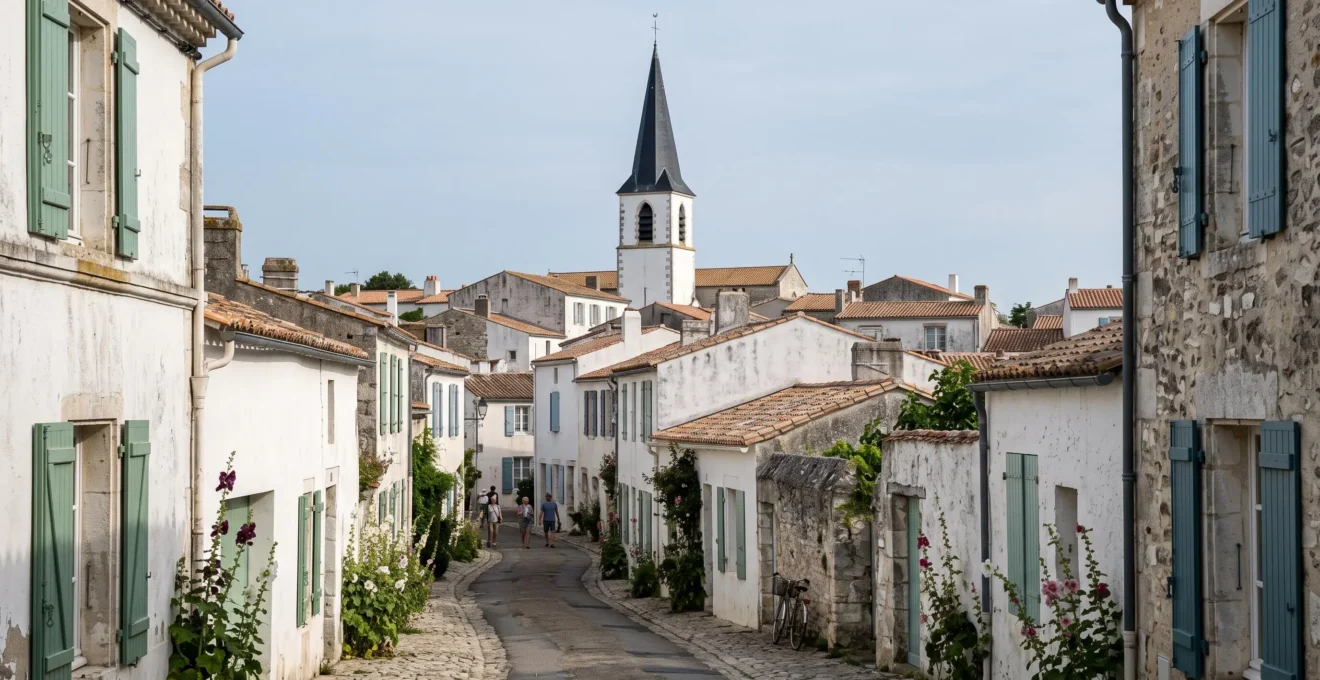
Ars-en-Ré is worth visiting for its charming whitewashed houses, distinctive black-and-white church tower, picturesque harbour and traditional salt marshes. Located on the northern side of Île de Ré, off France’s Atlantic coast, this historic village combines architectural heritage with coastal landscapes and a relaxed atmosphere. Visitors can explore its maritime history, discover local food traditions and enjoy the surrounding countryside on foot or by bicycle.
Whether you are planning a short stop or a longer excursion, Ars-en-Ré offers rewarding experiences within and beyond its historic centre. Its appeal lies in the connection between traditional village life, maritime heritage and the landscapes that surround it.
What makes Ars-en-Ré one of the island’s most beautiful villages?
Ars-en-Ré is one of two villages on Île de Ré recognised by the French heritage villages association, alongside La Flotte. The distinction supports its heritage appeal, while its white houses, green shutters and narrow flower-lined streets show visitors what makes that appeal tangible.
The village’s beauty comes from a remarkably consistent architectural character. Low, whitewashed buildings line narrow streets, with green shutters providing colour against the pale façades. Hollyhocks often grow beside walls and doorways, adding to the traditional appearance of the settlement.
Unlike a destination built around a single monument, Ars-en-Ré rewards visitors who explore its smaller details. An old doorway, a quiet lane or a glimpse of the church tower between rooftops can be as memorable as the main square. Walking allows you to appreciate these features without rushing between attractions.
Saint-Étienne Church and the village’s maritime history
Saint-Étienne Church is the architectural landmark most closely associated with Ars-en-Ré. Its heritage combines Romanesque and Gothic elements, but the feature that immediately catches the eye is its unusual black-and-white bell tower.
Its black-and-white bell tower serves as a recognisable maritime landmark, helping sailors identify the entrance to the Fier d’Ars and the harbour.
Place Carnot, in the historic centre, is a useful starting point for appreciating the church and exploring the nearby streets. From here, visitors can observe the tower, examine the surrounding architecture and continue through the old village at their own pace.
Salt production and commerce also contributed to the village’s development. Historic commercial buildings and former merchants’ houses recall the trade associated with Ars-en-Ré.
Look beyond the main landmark as you walk: the scale of the houses and the arrangement of the streets help explain how the village developed around everyday life and local economic activity.
The harbour and the changing landscape of the Fier d’Ars
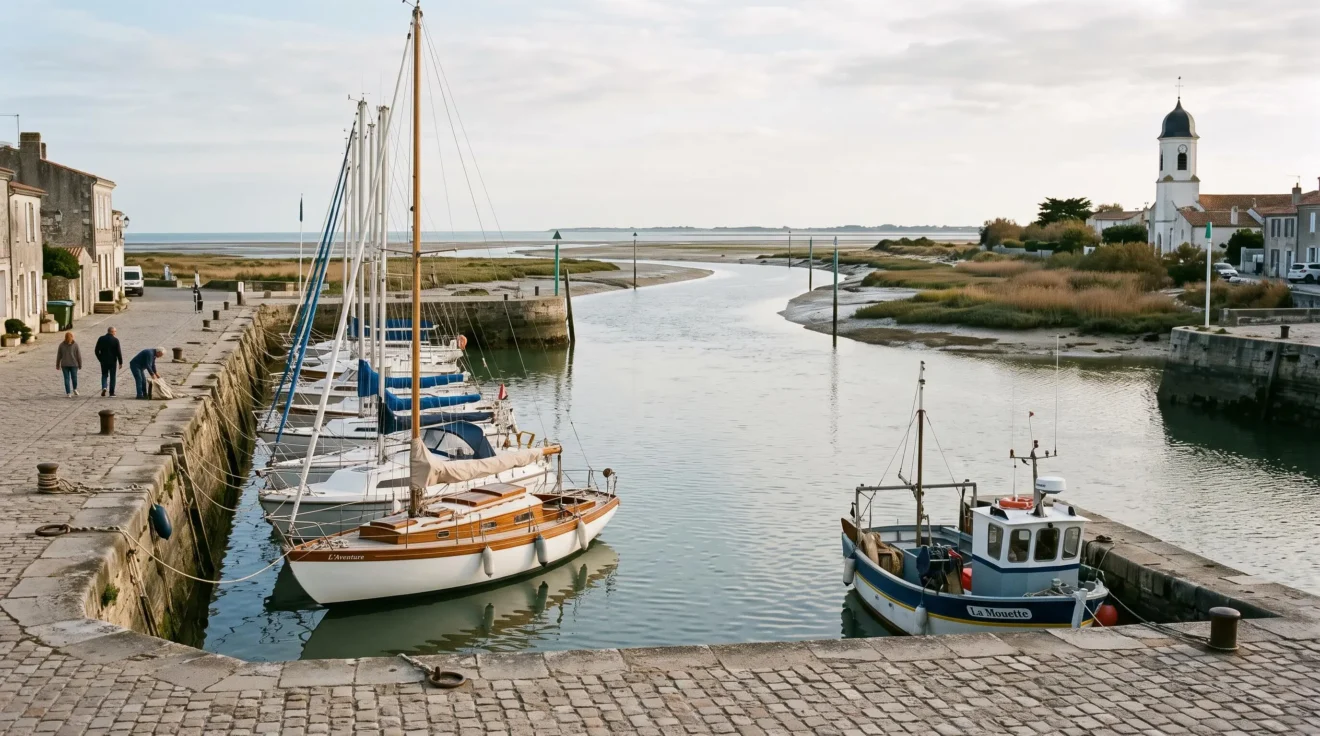
The harbour introduces another side of Ars-en-Ré. While the historic centre is characterised by enclosed streets and traditional houses, the waterfront offers open views, moored boats and a stronger sense of the village’s coastal geography.
The harbour is connected by a channel to the Fier d’Ars, a tidal bay in the northern part of Île de Ré. These are distinct environments: the harbour provides a sheltered waterfront, while the wider bay includes areas of shallow water, mudflats and sandbanks that change in appearance with the tides.
Walking beside the harbour provides an opportunity to observe this relationship between the settlement and the sea. Boats, quays and the access channel illustrate the practical importance of maritime activity, while the surrounding landscape reveals the natural conditions that have influenced life here.
At low tide, exposed areas of the Fier d’Ars make the tidal character of the bay particularly visible from accessible viewpoints. The exposed mudflats and sandbanks are part of this changing landscape, not an invitation to walk across them. Any shore-based activity depends on permitted access, ground conditions and local restrictions.
The contrast between the compact centre and the open waterfront is a good reason to include both in a village walk rather than treating the harbour as a separate attraction.
Why the salt marshes are essential to the village’s identity
The salt marshes are more than a scenic backdrop: traditional salt production remains part of the area’s working landscape. The official Ars-en-Ré visitor guide also connects this heritage with local walking routes and the wider natural setting, making the marshes a meaningful addition to a village visit.
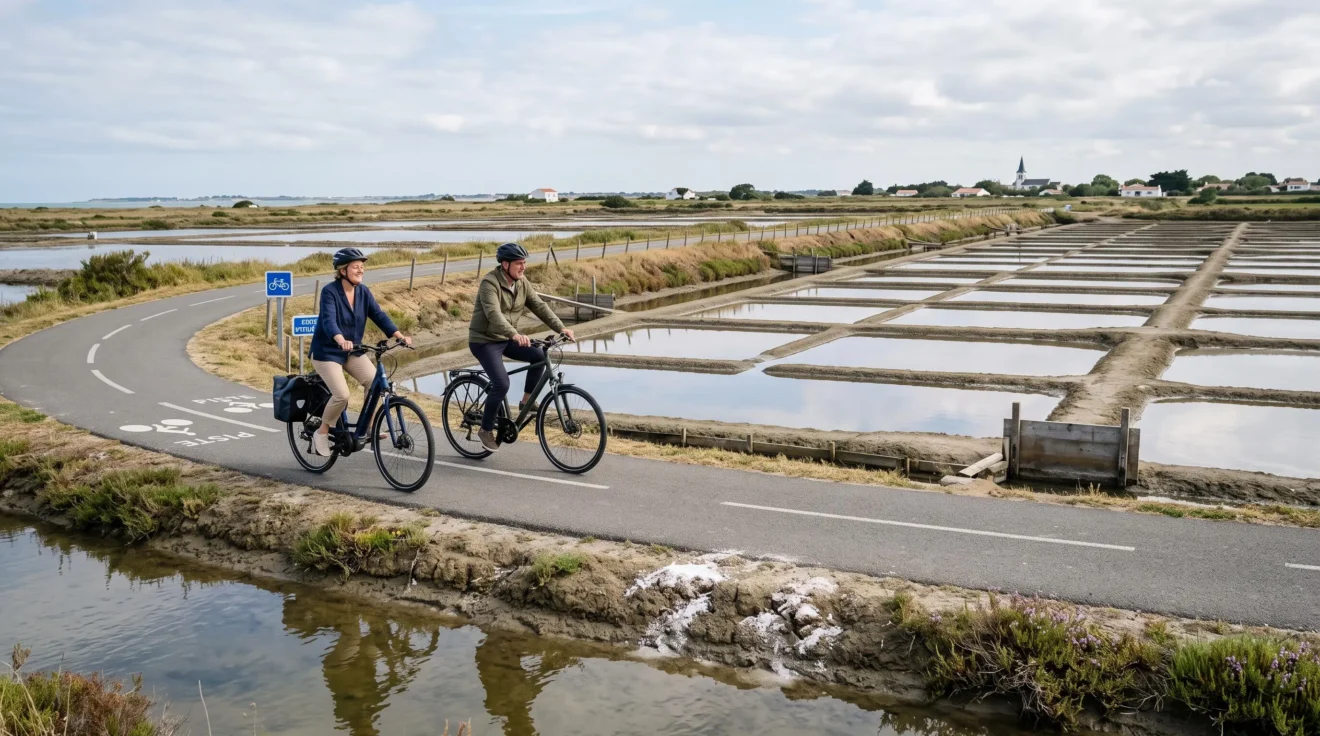
Salt production relies on a relationship between seawater, shallow ponds, evaporation and the work of salt producers. Water moves through a network of basins, where natural evaporation progressively concentrates the salt. This explains the geometric appearance of the marsh landscape: its ponds and separating banks form part of a working system rather than a purely decorative feature.
Historically, the salt trade influenced the village’s economy and commercial buildings. Today, the continued presence of working marshes allows visitors to connect that history with an activity still associated with Île de Ré.
Walking or cycling along permitted routes provides different views of the ponds, banks and surrounding vegetation. The experience can be particularly rewarding for travellers interested in how local crafts shape a landscape.
What to notice around the salt marshes
- The network of ponds: shallow basins and their banks reveal how the landscape has been organised for salt production.
- The working environment: some areas remain active production sites and should be observed from permitted paths.
- The connection with village history: traditional salt production helps explain the area’s longstanding commercial and maritime identity.
Respect for the site is essential. Remain on designated routes, follow local signs and avoid entering working salt beds or protected habitats. Actual harvesting activity may vary with the season and conditions.
Local flavours, markets and everyday village life
Ars-en-Ré also offers opportunities to experience the food traditions of Île de Ré. Its market culture and local produce provide a natural complement to a walk through the historic streets.
Depending on the season and available traders, visitors may encounter fresh produce, seafood and specialities associated with the island, including locally produced salt. These products reflect the relationship between the surrounding land, Atlantic waters and regional food culture.
A market visit is particularly enjoyable when combined with exploring the village centre. Rather than planning an itinerary around a specific stall, allow time to browse, observe the atmosphere and choose products according to what is available.
Check current market days and opening times before relying on them for a visit. The historic streets and harbour remain worthwhile attractions even when the market is not operating.
How to plan a visit to Ars-en-Ré
The best way to explore Ars-en-Ré depends on whether your main interest is the historic village or the natural landscapes surrounding it. Both approaches can be rewarding, but they offer different experiences.
| Visit style | Main focus | Best suited to |
|---|---|---|
| Historic-centre walk | Saint-Étienne Church, traditional lanes and harbour | Visitors interested in architecture, heritage and village atmosphere |
| Extended nature outing | Village sights, salt-marsh paths and optional northern-island cycling | Visitors who enjoy coastal scenery and outdoor exploration |
The historic centre can be explored on foot, while the tourist office describes three walking trails around Ars-en-Ré for visitors who want to explore beyond the central streets. These routes offer alternatives to a compact village walk, with the choice depending on available time and interest in the surrounding landscape.
For a wider excursion, cycle routes connect the area with destinations such as La Conche beach, Phare des Baleines and the Lilleau des Niges area. These are extensions beyond the historic centre rather than attractions along the village walking route. Choose a suitable route and remain on permitted paths around working marshes and protected natural areas.
- Begin at Saint-Étienne Church. Observe the unusual tower and the surrounding historic architecture.
- Explore the village lanes. Look for white façades, green shutters and the smaller architectural details that characterise Ars-en-Ré.
- Continue towards the harbour. Experience the waterfront and the contrast between the village and the tidal setting.
- Add a nature excursion if time allows. Follow a permitted marshland walking route or choose a suitable cycling path.
Visitors primarily interested in a beach day may prefer to make a nearby beach their main destination and include Ars-en-Ré as a cultural stop. Those more interested in architecture, maritime heritage and nature can make the village the focus of their outing, adding a longer walk or cycling excursion when time and conditions allow.
- Check the weather and local tide conditions if planning a coastal activity for which they matter, and follow local access guidance.
- Confirm current market and attraction opening times if these are important to your itinerary.
- Choose walking or cycling routes that suit your available time and mobility.
- Stay on permitted paths around working marshes and protected natural areas.
Is Ars-en-Ré worth visiting?
Yes. Ars-en-Ré is particularly worthwhile for visitors interested in traditional architecture, maritime heritage and coastal nature. A village-focused visit brings together the church, historic streets and harbour, while a longer outing adds the salt marshes and opportunities to explore northern Île de Ré.
Choose the compact walk if you want to concentrate on the village’s heritage and atmosphere. Allow more time for a marshland walk or cycling excursion if the surrounding landscape is equally important to you. If a beach day is your priority, make a nearby beach the main destination and treat Ars-en-Ré as a complementary cultural stop. The right choice depends on the experience you want, rather than an assumed need to see every attraction.